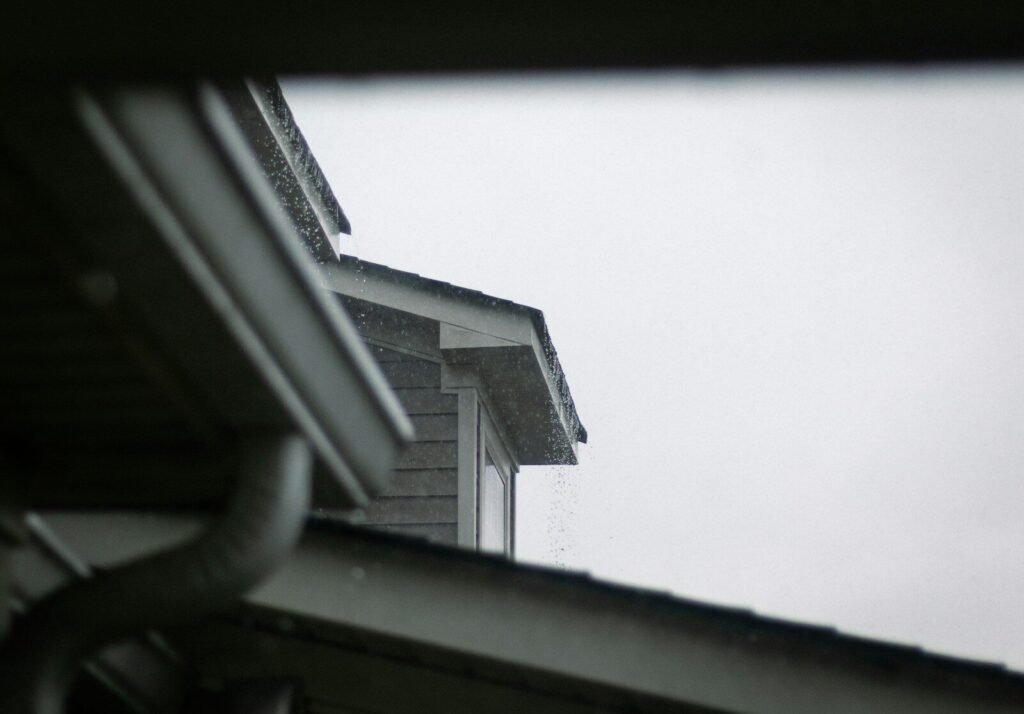
Gutters are roof work in the way a frame is picture work — easy to overlook, and the first place water goes when they fail. A roof can be in fine shape while failed gutters quietly rot the fascia behind them, stain and soak siding, and dump roof water against the foundation. This page covers how to tell whether gutters need attention, and how gutter work fits alongside a roof project.
Signs Your Gutters Need Attention
- Overflow in ordinary rain. Water spilling over the front edge during a normal Lynchburg rain usually means a clog, a sag, or a downspout that cannot keep up — start with cleaning and a slope check before assuming replacement.
- Sagging runs and pulling spikes. Gutters that bow between hangers or pull away from the fascia hold standing water, overflow at the low spots, and get heavier with every clog.
- Peeling paint, soft or rotted fascia, and soffit stains. These point to water getting behind the gutter — often from overflow, a failed drip edge, or a clogged run backing up under the roof’s edge.
- Seams that drip. Sectional gutters are joined and sealed at seams and corners, and those seals age. Persistent seam leaks on otherwise sound gutters may be resealable; widespread corrosion or thin, pitted metal is replacement territory.
- Water where it should not be below. Basement dampness, eroded mulch, and trenches under the drip line often trace back to gutters dumping water at the foundation instead of carrying it away through downspouts and extensions.
- Granules by the bucketful. A downspout discharge full of shingle granules is also roof information — it belongs in an inspection conversation about the shingles themselves.
Repair, or Replace with the Roof?
Cleaning, re-sloping a run, resealing a corner, or replacing a crushed downspout section are repairs worth doing when the gutter system overall is sound. Replacement makes more sense when runs are corroded, badly dented, chronically undersized for the roof area they serve, or when the fascia behind them needs work anyway. If you are already planning a roof replacement, decide on gutters at the same time: the crew is on site, the old gutters may need to come off for the roof edge work in any case, and new gutters installed against fresh drip edge and sound fascia are a cleaner result than fitting them later. Ask whether gutter work in a proposal is seamless (formed on site to the run length, with fewer seams) or sectional, what size is being installed, and how many downspouts and where they discharge.
A Word on Gutter Guards
Guards, covers, and screens can reduce how often gutters need cleaning — particularly on Lynchburg’s many tree-covered lots — but none makes a gutter maintenance-free, and the right style depends on your roof pitch, tree types, and debris load. Pine needles, oak tassels, and shingle granules each defeat different guard designs. A company that sells one guard as the answer for every house is selling inventory, not advice. Expect an honest installer to look at your trees and roof first, and to tell you if plain, well-pitched gutters with scheduled cleaning would serve you just as well.
This site does not quote gutter prices — scope, length, size, material, and fascia condition decide them, and quotes come from the company doing the work, which must be licensed and insured as described throughout this site.
Call for roofing help: Request roofing service — mention “gutters” and whether they are part of a roof project or a standalone problem. The contact form’s notes field is a good place to describe overflow, sagging, or fascia damage you can see from the ground.