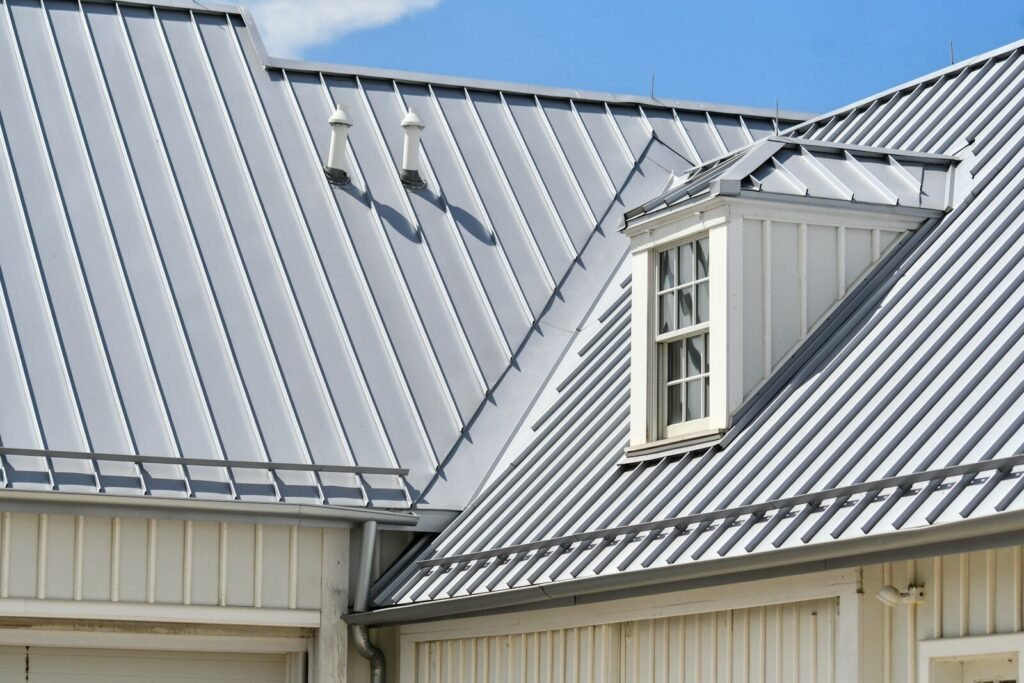
Metal roofing has a strong following in Central Virginia, and for good reasons — but it is not the right answer for every house or every budget. This page lays out the main types, the genuine advantages, and the trade-offs, so you can talk to a roofing company as an informed buyer instead of a convinced one.
The Main Types on Homes
Standing seam is the panel system most people picture: long vertical panels with raised, interlocking seams and hidden fasteners. The concealed-fastener design is a real functional advantage, because fasteners are not exposed to weather across the roof surface.
Exposed-fastener panels are common on barns, outbuildings, and some homes. They generally cost less to install than standing seam, but the fasteners themselves are part of the maintenance picture over time, as washers age and screws can back out.
Metal shingles and shakes mimic the look of conventional roofing in smaller pressed pieces. They suit homeowners who want metal’s durability with a more traditional street appearance, and they are often used where neighborhood expectations matter.
Where Metal Makes Sense
- You plan to stay a long time. Metal’s strongest case is longevity. A properly installed metal roof is generally expected to outlast a single asphalt shingle roof by a wide margin, which spreads its higher upfront cost over more years.
- Your roof geometry suits it. Large, relatively simple roof planes are where metal performs and prices best. Widely available panel systems handle many residential pitches well.
- You value low routine maintenance. Metal does not shed granules or support the kind of surface wear that ages shingles, though it still needs periodic checks of flashing, sealants, and — on exposed-fastener systems — the fasteners.
- Outbuildings and additions. Matching a home’s metal roof across a garage, porch, or barn is common in the Lynchburg area’s rural properties.
The Honest Trade-Offs
Metal generally costs more upfront than asphalt shingle — how much more depends on the system, the roof’s complexity, and the metal and finish chosen, and only an on-roof quote can price your house. Complex roofs with many hips, valleys, dormers, and penetrations raise labor on any material, and on metal especially. Repairs and later modifications should be done by crews experienced with the specific system; a metal roof is less forgiving of improvised patching. Finally, color and finish choices are long commitments: pick for the house you will still like in twenty years, not only for this season’s trend.
Questions to Ask Before You Choose Metal
- Which system are you quoting — standing seam, exposed fastener, or metal shingle — and why that one for my roof?
- What are the panel metal, thickness (gauge), and finish, in writing?
- How are valleys, chimneys, and pipe penetrations flashed in this system?
- What does the workmanship warranty cover, and who honors the manufacturer finish warranty?
- Who has installed this system locally that I could drive by and look at? (Addresses of past work are the company’s to share with permission — this site publishes no project photos or addresses.)
Call for roofing help: Request roofing service — connect with a licensed, insured local company that installs metal roofing. The contact form helps if you note your current roof material, whether this is for the main house or an outbuilding, and the rough size of the home.
Also see Roof Replacement and our Cost Guide.